Mission

Mission

About the Icelandic Meteorological Office

The Icelandic Meteorological Office (IMO) is a public institution, historically based on the Icelandic Meteorological Office (1920) and the Icelandic Hydrological Survey (1948). The two institutions merged in 2009, with the responsibility of monitoring natural hazards in Iceland and conducting research in related fields, as well as participating in international monitoring and research. IMO has a staff of 130 people, of which 60 staff members work on research-related activities.

The main purpose of IMO is to contribute towards increased security and efficiency in society by:

  • Monitoring, analyzing, interpreting, informing, giving advice and counsel, providing warnings and forecasts and where possible, predicting natural processes and natural hazards;
  • issuing public and aviation alerts about impending natural hazards, such as volcanic ash, extreme weather and flooding;
  • conducting research on the physics of air, land and sea, specifically in the fields of hydrology, glaciology, climatology, seismology and volcanology;
  • maintaining high quality service and efficiency in providing information in the interest of economy, of security affairs, of sustainable usage of natural resources and with regard to other needs of the public;
  • ensuring the accumulation and preservation of data and knowledge regarding the long-term development of natural processes such as climate, glacier changes, crustal movements and other environmental matters that fall under IMO‘s responsibility.

IMO‘s nationwide monitoring systems consist of 115 automatic and 100 manned weather stations, a network of 170 hydrological gauges in rivers, a 55-station seismic network (SIL) with automatic, real-time data acquisition and earthquake location, a continuous GPS (ISGPS) network of 70 stations, some with high sample rate, a 5-station borehole strain meter network is operated in southern Iceland, and a weather radar, which can also monitor volcanic plumes, is located in south-western Iceland. In addition, IMO conducts extensive manned monitoring of glacial rivers and sub-glacial floods (jökulhlaup), of glacier mass balance and margin positions and participates in nationwide GPS campaign measurements.

IMO has a long-term advisory role with the Icelandic Civil Defence and issues public alerts about impending natural hazards.

The institute participates in international weather and aviation alert systems, such as London Volcanic Ash Advisory Centre (VAAC), the Icelandic Aviation Oceanic Area Control Center (OAC Reykjavík) and the European alarm system for extreme weather, Meteoalarm.

IMO has participated in several European and Nordic funded research projects, having the role of lead partner in some of them. This includes for example the "Climate and Energy Systems" project, whose goal is to look at climate impacts closer in time and assess the development of the Nordic electricity system for the next 20-30 years.

The main research focus of IMO is on earthquake and volcanic processes and hazards, glacial studies, ice-volcano interaction and climate change. IMO also focuses on research in multiparameter geophysical monitoring to develop better forecasts of hazardous events.

bygging

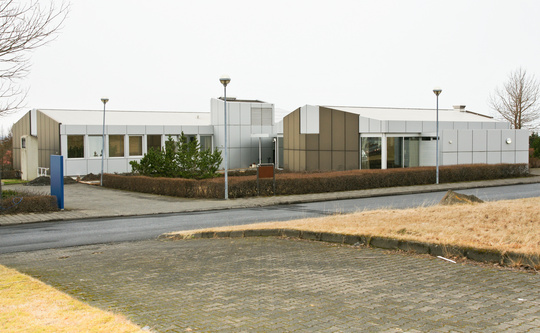
The new reception of the Icelandic Meteorological Office at Bústaðavegur 7 in Reykjavík.


News

The weather of 2010 in Iceland

The weather in Iceland was highly unusual in 2010. This applies especially to the South and West parts of the country where the year was one of the warmest and driest on record and the snowfall was unusually light. The barometric pressure reached the highest annual value on record. The climate was very favorable and windstorms markedly fewer than usual. Read more
 

NONAM organises a PhD summer school

Are you a PhD student with an interest in adaptive management in relation to climate change? NONAM organizes its second event, a PhD summer school in Copenhagen 2011, in association with FIVA, the International Research School of Water Resources.

Read more
 

Jökulhlaup from Grímsvötn subsides

The jökulhlaup (glacial outburst flood) from Grímsvötn that began near the end of October is now coming to an end. In past centuries, most jökulhlaups from Grímsvötn have entered the course of the river Skeiðará. This time, however, floodwater that emerged from beneath the eastern part of the glacier went westwards along the glacier margin and then entered the river Gígjukvísl. In the summer of 2009, the shift occurred and water has ceased to enter the course of Skeiðará. Read more
 

A jökulhlaup from Grímsvötn

On October 31, a glacier outburst flood (jökulhlaup) emerged from beneath the Skeiðarárjökull glacier, a southern outlet of the Vatnajökull ice cap. The present flood is small and no threat to roads and bridges is imminent. Read more
 

The Climate and Energy Systems project final conference

The final conference of the CES project "Future Climate and Renewable Energy - Impacts, Risks and Adaptation" was held in Oslo from 31 May to 2 June. Stake-holders from the energy sector and researchers from the Nordic and Baltic countries met to exchange views and acquire information about current research of climate changes and energy issues. Read more
 

Webpage on travel safety

At the beginning of June 2010, a group was formed consisting of Icelandic organizations, companies and government institutions, including the Icelandic Meteorological Office, that have an interest in the travel industry. This group has created a new web site, Safetravel.is, where information on travel safety is accessible. Read more
 

NONAM conference in August

NONAM, the Nordic Network on Adaptive Management in relation to Climate Change, organizes a multidisciplinary workshop in August 2010 on Risk Assessment and Stakeholder Involvement. Read more
 

Hydrology of Eyjafjallajökull

Meltwater from the eruption in Eyjafjallajökull runs into river Markarfljót. Hydrological monitoring and interpretation of hydrological data are an important part of risk assessment. Read more
 

Latest observations at Eyjafjallajökull

An update on events and prospects, including ash forecasts as well as earlier information, can still be found through links in red at IMO's front page. Read more
 

Eyjafjallajökull eruption

An update on events and prospects, including ash forecasts as well as earlier information, can be found through links in red at IMO's front page. Read more
 

Magma splatters ejected

Magma batches have have now accumulated on the crater's rim. Lumps and batches of magma have also fallen on the ice around the crater and this gives rise to steam plumes. Read more
 

The Eyjafjallajökull plume

IMO's radar near Keflavik has not detected the plume from Eyjafjallajökull since early this morning. Seismic tremor is ongoing and at a strong level. Read more
 

Ash carried southward and east

Winds from the north carry the ash southward, where westely winds in the upper atmosphere carry it towards the east. The wind directions are not expected to change much during the next few days. Read more
 

Ash clouds and flash floods

At 4 pm the volcanic ash cloud was clearly visible above the cloud deck, rising at times to at least 30,000 feet (9 km). Read more
 

Ash cloud extending to Europe

A satellite image sequence shows volcanic ash cloud extending to Europe, 15 April 2010, from the eruption in Eyjafjallajökull. Read more
 

Ongoing eruption

The plume drifts with north-westerly winds reaching Europe. It has been detected over Norway, Sweden, northwestern Russia, northern Poland, northern Germany, northern France and southern UK. Read more
 

New eruption in Eyjafjallajökull

After a few days of quiet in Eyjafjallajökull volcano, a new and much more forceful eruption has begun west of Fimmvörðuháls. Read more
 

The volcano measured

Institute of Earth Sciences, University of Iceland, has measured the size of the new volcano which has formed around the craters at the eruption site on Fimmvörðuháls. Read more
 

The eruption continues with little changes

Reduced visibility (10 m) and risky weather keep visitors well away from the eruption now; all access is restriced. Lava fountains have been active both northeast of the main crater and in the old crater. Most of the lava seems to accumulate near the vents, but there are intermittent flows into the gullies of Hruná and Hvanná. Read more
 

The magma path revealed

Earthquakes in the Eyjafjallajökull volcano have now been relocated using a double-difference relocation method. This approach provides a much sharper image of the event distribution and reveales the magma path to the surface. Read more
 

Ninth day of the eruption

The eruption in the Eyjafjallajökull volcanic system has been on a small scale so far and tremor signals are diminishing, at least for the time being. Read more
 

Photos from Fimmvörðuháls

Many photographs have been taken since the eruption began, 20th March, and videos as well. See Earth's fire in action. Read more
 

Eruption on Fimmvörðuháls

An eruption began in Eyjafjallajökull between 22:30 and 23:30 GMT on Saturday evening, March 20th. The eruption fissure is about 0.5 km long and is located on the norhern side of Fimmvörðuháls, east of the Eyjafjallajökull ice cap. Seismic activity in Eyjafjallajökull has been intensive for the past three weeks. The activity migrated eastwards and towards the surface on Saturday, March 20th. Read more


Quality management certified Accessibility certification for priority level 1 Accessibility certification for priority level 2


Other related web sites


This website is built with Eplica CMS